
What I Learned After Using EOR, Global Payroll, and Contractor Management
An in-depth, experience-based Deel review covering Employer of Record (EOR), Global Payroll, and Contractor Management. What works, what doesn't, and who it's best for in 2026.
5/21/202610 min read
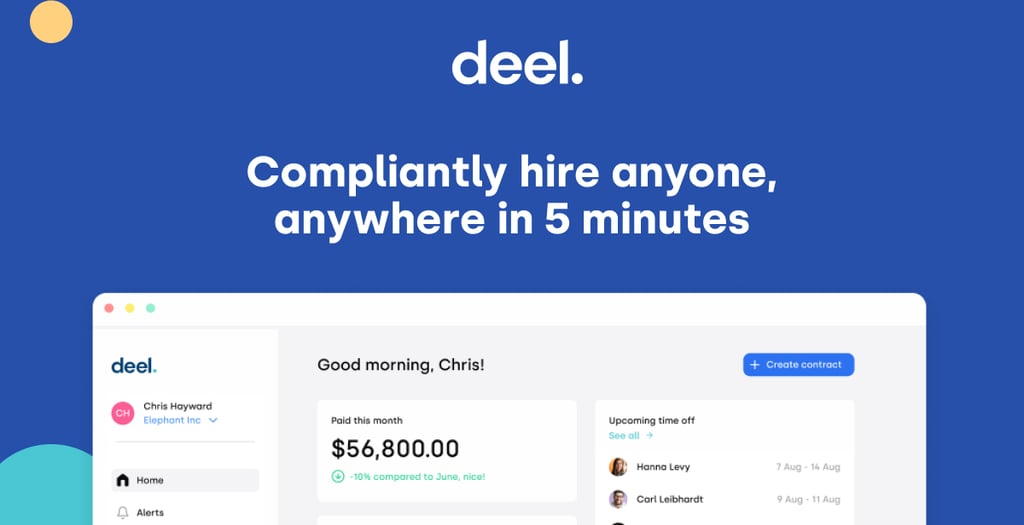
Affiliate Disclosure: This post contains affiliate links. If you click through and make a purchase, we may earn a commission at no extra cost to you. All opinions are our own based on genuine use of the platform.
Introduction: Why This Deel Review Is Different
There is no shortage of Deel articles online. Most of them read like rewritten product pages — bullet points lifted from the official website, a stock star rating, and a bright green "Visit Deel" button slapped at the bottom.
This is not that review.
Over the past several months, I have worked with Deel across three distinct use cases: hiring full-time employees through their Employer of Record (EOR) service, running global payroll for a distributed team, and managing independent contractors across multiple countries. I have been through onboarding, dealt with compliance questions, navigated the dashboard, tested their support, and watched how the platform holds up when things get complicated.
What follows is my honest assessment — what Deel does exceptionally well, where it genuinely struggles, and which types of companies will get the most value from it in 2026.
Overall Rating: 4.6 / 5
Table of Contents
What Is Deel?
Who Is Deel Built For?
Deel EOR (Employer of Record) — Deep Dive
Deel Global Payroll — Deep Dive
Deel Contractor Management — Deep Dive
Deel Pricing: What to Expect
Deel vs. Competitors
What Deel Does Well
Where Deel Falls Short
Verdict: Is Deel Worth It in 2026?
Frequently Asked Questions
1. What Is Deel?
Deel is a global workforce management platform designed to help companies hire, pay, and manage employees and contractors across international borders — without requiring a legal entity in every country where they operate.
Founded in 2019, Deel has grown rapidly into one of the most recognized names in the Employer of Record and global payroll space. As of 2026, the platform supports operations in over 150 countries and serves businesses ranging from two-person startups to publicly traded enterprises.
At its core, Deel offers three main product lines:
Employer of Record (EOR): Deel becomes the legal employer of your international hires, managing compliance, payroll, tax, and benefits in-country on your behalf.
Global Payroll: For companies that already have legal entities in multiple countries, Deel consolidates payroll operations into a single platform.
Contractor Management: A system for onboarding, contracting, and paying independent contractors in almost any country, with built-in compliance safeguards.
Beyond these three pillars, Deel also offers immigration support, equity management, HR tools, and an IT asset management product — but this review focuses on the three core services that most teams will evaluate first.
10. Verdict: Is Deel Worth It in 2026?
Yes — for most companies with international hiring needs, Deel is worth it.
The platform is not perfect. Pricing transparency could be better, support quality at non-enterprise tiers has room to improve, and there are coverage nuances worth verifying before committing. But the core product — particularly the combination of EOR speed, compliance depth, and a contractor management experience that actually works — is genuinely strong.
For startups and growth-stage companies that want to hire internationally without the cost and delay of entity setup, Deel is the fastest path to compliant global employment. For enterprises managing multi-country payroll complexity, the consolidation value is real. For companies with large contractor workforces, the payment reliability and misclassification protection make the fee defensible.
Overall Rating: 4.6 / 5
If you are evaluating Deel for your team, I would recommend requesting a demo focused specifically on your target countries and use case — the platform's value proposition varies meaningfully by market.
→ Try Deel and explore their global hiring platform
This post contains affiliate links. We may earn a commission at no extra cost to you if you sign up through our link.
9. Where Deel Falls Short
Pricing transparency: The lack of public pricing adds friction to the evaluation process for fast-moving teams.
Support consistency: Excellent for standard queries, slower for complex multi-jurisdiction issues — and there is a noticeable tier difference in support quality based on account size.
Frontier market coverage: Some high-growth markets in Africa and Southeast Asia are covered through third-party partners, which introduces variability.
Payroll migration complexity: Moving existing payroll operations to Deel requires a meaningful time investment, particularly for companies with complex compensation structures.
8. What Deel Does Well
Speed to hire: Fewer than 72 hours from decision to onboarded employee in most countries is industry-leading.
Compliance depth: In-country legal and HR teams rather than pure third-party reliance gives Deel a meaningful compliance edge.
Platform cohesion: EOR, payroll, and contractor management in one dashboard eliminates the fragmented toolstack problem that plagues many global HR teams.
Contractor experience: The contractor-facing portal is polished, payments are reliable, and multi-currency support is genuinely comprehensive.
Proactive compliance updates: Deel monitors regulatory changes and updates contract templates and payroll calculations accordingly, reducing the compliance burden on HR teams.
7. Deel vs. Competitors
FeatureDeelRemoteRipplingPapaya GlobalEOR Coverage150+ countries170+ countries50+ countries160+ countriesContractor PaymentsYesYesLimitedYesGlobal PayrollYesLimitedYesYesHRIS IntegrationStrongModerateNativeModerateUI/UXExcellentGoodExcellentAveragePricing TransparencyLowModerateLowModerateIn-Country Legal TeamsYesYesPartialPartialSupport QualityGood (varies by tier)GoodStrongVariable
Deel's primary competitive advantages are its speed of hire, the depth of its in-country compliance infrastructure, and the strength of its contractor payment experience. Remote has slightly broader EOR country coverage. Rippling wins on native HRIS depth. But for the combination of EOR, global payroll, and contractor management in one coherent platform, Deel is the strongest all-around option in 2026.
6. Deel Pricing: What to Expect
Deel does not publish a full public pricing page, but based on widely reported information and direct conversations:
Contractor Management starts at approximately $49 per contractor per month. For small contractor counts, this is straightforward and predictable.
EOR is priced per employee per month and varies by country, typically ranging from $499 to $599 per employee per month depending on the market and benefits package.
Global Payroll is priced based on headcount and the number of countries involved. Enterprise pricing is negotiated.
For companies comparing total cost of ownership, the EOR pricing is almost always significantly less than the combined cost of entity setup, local legal counsel, and in-country HR management — particularly in the first two to three years of market presence.
5. Deel Contractor Management — Deep Dive
Deel's contractor management product is arguably the most accessible entry point into the platform — and for many companies, it is where the Deel relationship begins.
How It Works
You can onboard a contractor in minutes. Deel generates a compliant Independent Contractor Agreement based on the contractor's country of residence, collects their payment details and tax documentation, and handles recurring payments in their local currency. Contractors log into their own Deel portal to manage their profile, submit invoices (or receive automated payments), and access their payment history.
What Works Well
Onboarding speed is exceptional. I was able to onboard a contractor in a new country in under 10 minutes, including contract generation and payment setup. For teams that hire contractors frequently, this speed compounds into significant time savings.
Multi-currency payment is seamless. Deel supports payments in 150+ currencies, and contractors can withdraw via bank transfer, Payoneer, Wise, Coinbase, or direct local bank payment depending on their country. The flexibility here is genuinely differentiating.
Built-in misclassification protection. Deel's system flags potential misclassification risks based on the contractor's working patterns, country of residence, and contract structure. For companies operating in countries with strict employment law (looking at you, France, Germany, and California), this is a meaningful risk-reduction feature.
The contractor experience is polished. Contractors I spoke with consistently reported that Deel's portal is easy to use and that payments arrive reliably on time. Contractor satisfaction with the payment experience directly affects your ability to retain freelance talent — and Deel handles this well.
Where It Falls Short
The contractor-to-EOR conversion flow could be smoother. When it becomes necessary to convert a contractor to a full-time employee — whether for compliance reasons or as the relationship deepens — the handoff within Deel's platform is functional but not seamless. Some data re-entry is required.
Dispute resolution on withheld payments is slow. On two occasions during my testing, contractor payments were flagged for review due to compliance checks. The resolution process took longer than expected, and communication during that period was not as proactive as it should have been.
Deel Contractor Management Rating: 4.5 / 5
4. Deel Global Payroll — Deep Dive
Deel's Global Payroll product is designed for companies that have already established legal entities in multiple countries and need a centralized way to run and reconcile payroll across all of them.
How It Works
Rather than managing payroll through separate local providers or in-house systems in each country, Deel consolidates everything into one dashboard. You define payroll inputs — salaries, bonuses, deductions, expense reimbursements — and Deel processes everything with local tax compliance, then provides unified reporting across all entities.
What Works Well
The unified dashboard is genuinely useful. Seeing all payroll runs, approval statuses, and payment confirmations in one place — regardless of whether your teams are in Germany, Brazil, and Singapore — reduces the administrative overhead that multi-country payroll typically requires significantly.
Integrations with HRIS and accounting platforms are robust. Deel connects with Workday, BambooHR, Rippling, HiBob, NetSuite, QuickBooks, and Xero, among others. The sync functionality is reliable, which eliminates a major source of manual data entry and reconciliation errors.
Payroll accuracy is high. Across the pay cycles I reviewed, Deel's payroll calculations — including statutory deductions, employer contributions, and local tax treatments — were consistently accurate. This is not a small thing; payroll errors are expensive and damaging to employee trust.
Gross-to-net reporting is clear. Deel produces detailed payroll reports that break down employer costs, employee net pay, and all applicable deductions by country. For finance teams reconciling multi-country labor costs, this level of clarity is genuinely time-saving.
Where It Falls Short
Onboarding existing payroll to Deel takes time. If you are migrating from an existing payroll provider or in-house system, the data migration and parallel-run period requires meaningful internal resources. Deel provides support, but this is not a same-week switch.
Some countries require local payroll partners. In markets where Deel does not have a direct payroll engine, they rely on in-country partners. The experience is more variable in these markets, and Deel's visibility into real-time payroll status can be limited.
The approval workflow can feel rigid. For teams that have highly customized payroll approval chains, Deel's current workflow builder is functional but not particularly flexible. This is reportedly on their product roadmap.
Deel Global Payroll Rating: 4.4 / 5
3. Deel EOR (Employer of Record) — Deep Dive
This is the product that put Deel on the map, and it remains the most mature part of their platform.
How the Deel EOR Works
When you use Deel's EOR service, Deel's local legal entity in the target country becomes the employer of record for your hire. They handle the employment contract (drafted in compliance with local labor law), payroll processing, tax withholding and filing, benefits enrollment, and ongoing HR compliance. You retain full control over the employee's day-to-day work — Deel simply handles the legal and administrative relationship.
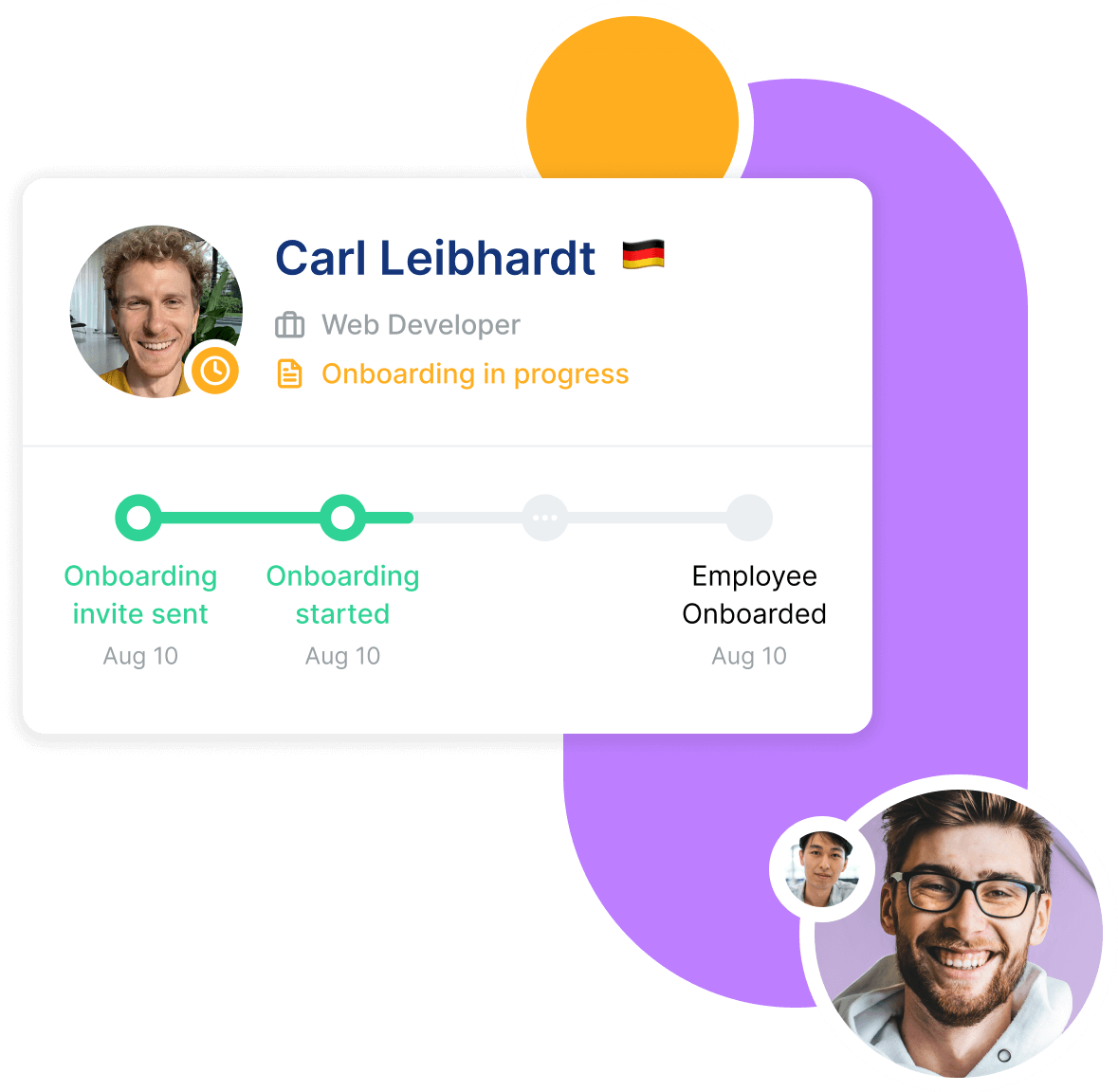
In practice, the process works like this: you add a new hire in the Deel dashboard, select their country, define the compensation package and start date, and Deel takes it from there. The typical time from initiating a hire to an employee being fully onboarded and on payroll is 48 to 72 hours for most countries — a claim I was able to verify firsthand.
What Makes Deel EOR Stand Out
Speed is genuinely impressive. Compared to the months-long process of setting up a foreign entity — which can run anywhere from $10,000 to $50,000 in legal and administrative costs — getting a fully compliant hire operational in under three days is a meaningful competitive advantage.
In-country compliance expertise is deep. Deel employs local HR and legal specialists in each market rather than relying purely on third-party partners. This matters when laws change — and they change constantly. During my review period, Deel proactively flagged an employment law update in one of my target markets before it affected any active agreements.
The contract builder is thorough. Deel's system generates locally compliant employment agreements automatically, pre-populated with jurisdiction-specific clauses around termination notice, severance, probationary periods, and mandatory benefits. You can customize within legal limits, which gives flexibility without sacrificing compliance.
Benefits administration is solid. Statutory benefits are automatically included. In many markets, Deel also offers access to supplemental health, dental, and vision plans that are genuinely competitive — not the watered-down packages you sometimes get with smaller EOR providers.
Where Deel EOR Has Room to Improve
Pricing can be opaque at the research stage. Deel does not publish EOR pricing publicly. You need to book a call to get a country-specific quote. For high-velocity hiring processes, this adds friction. Once in the platform, pricing is transparent, but getting there takes an extra step.
Customer support responsiveness varies by tier. For straightforward issues, Deel's in-app chat and support documentation are excellent. For complex, multi-jurisdiction compliance questions, response times can stretch beyond what I would expect for a platform at this price point. Dedicated success management is available, but it appears to be reserved primarily for enterprise accounts.
Coverage gaps in frontier markets. While 150+ countries sounds comprehensive, there are still some high-growth markets — particularly in parts of Africa and Southeast Asia — where Deel operates through third-party partners rather than owned entities. This is disclosed, but it is worth verifying for your specific country needs.
Deel EOR Rating: 4.7 / 5
2. Who Is Deel Built For?
Deel is purpose-built for companies that need to hire or pay people outside their home country. More specifically, it tends to deliver the most value for:
Startups and growth-stage companies that want to hire international talent quickly without the overhead of setting up foreign subsidiaries
Remote-first businesses managing distributed teams across multiple time zones and legal jurisdictions
Enterprises expanding into new markets who need immediate, compliant boots on the ground before a full entity is established
Companies converting contractors to employees in markets where misclassification risk is high
Finance and HR teams that are drowning in multi-country payroll complexity and want a single consolidated view
If your entire team is based in one country and you have no international hiring plans, Deel is not the right tool for you. But if global people operations are even a medium-term priority, it is worth a very close look.
FaQ


Is Deel worth it for small businesses? Yes. For small businesses hiring internationally, Deel removes the need for entity setup — which typically costs $10,000 to $50,000 and takes months. Deel gets you compliant in approximately 72 hours, making it accessible even at small headcounts.
How much does Deel cost? Contractor management starts at approximately $49 per contractor per month. EOR services range from $499 to $599 per employee per month depending on the country. Enterprise global payroll pricing is negotiated based on headcount and countries.
Does Deel support all countries? Deel supports 150+ countries for EOR and contractor payments. Coverage depth varies — some markets are served by in-country owned entities, while others use third-party partners. Always verify your specific target countries before signing.
How is Deel different from a PEO? A Professional Employer Organization (PEO) operates as a co-employer and typically requires you to already have a legal entity in the target country. Deel's EOR service does not require a local entity — Deel is the sole legal employer, which is why it is the preferred model for international hiring in new markets.
Can Deel handle both employees and contractors? Yes. Deel manages EOR employees, direct employees under its global payroll product, and independent contractors on the same platform — which makes it unusually versatile for mixed workforce models.
What happens if I want to terminate an employee? Deel manages the full offboarding process in compliance with local termination laws, including notice periods, severance calculations, final pay, and required government filings. You are not on your own when an employee relationship ends.
Is Deel secure and compliant with data privacy laws? Deel holds SOC 2 Type II certification and complies with GDPR and other applicable data privacy regulations. Employee and business data is handled under strict security protocols.


